Best Betting Sites
»
Best Prediction Market Sites for Trading Event Contracts
»
What Is a Prediction Market and How It Works
»
Kalshi vs Polymarket: Which Prediction Market App Is Right for You
Kalshi vs Polymarket: Which Prediction Market App Is Right for You
By
James Thompson,
Last Updated on 25.09.2026
Prediction market platforms are gaining popularity. Yet determining which is best to sign up with and trade on the outcomes of real-world events can be tough. That’s why we’ve prepared a showdown between two top brands: Kalshi vs Polymarket.
From our initial assessment, both platforms seemed similar, but after going in-depth, we found noticeable differences. As a result, we have prepared this guide to discuss the few features, such as regulation, market coverage, and trading volume, that set them apart. So, stick around to find out which platform is best for you.
Best Sweeps Casino Promo
Find the best prediction market sites and apps

Table of Contents
- Key takeaways from our Kalshi vs Polymarket comparison review
- Kalshi vs Polymarket pros and cons
- An overview of prediction markets
- Overview of Kalshi
- Overview of Polymarket
- Are Kalshi and Polymarket legal?
- Exploring the key differences between Kalshi and Polymarket
- Getting started with Polymarket or Kalshi
- Learn More About Prediction Markets Through Our Detailed Guides
- Which would you pick: Polymarket or Kalshi?
- Kalshi vs Polymarket FAQs
Key takeaways from our Kalshi vs Polymarket comparison review
- Both platforms operate like financial exchanges and are the most straightforward entry points for US traders.
- Traders can find similar markets on Kalshi and Polymarket to trade different real-world outcomes on sports, politics, pop culture, economics, climate, and cryptocurrency.
- Deciding between Kalshi and Polymarket comes down to your specific trading needs.
Kalshi vs Polymarket pros and cons
Before we get into the Kalshi vs Polymarket comparison, here are the pros and cons of both platforms to note.

Pros and Cons
- Easy to access platforms
- Highly-rated mobile apps
- Easily trade on the outcome of real-world events
- Both require a technical learning curve
An overview of prediction markets
Prediction markets are platforms that allow users to trade outcomes of real-world events. At their core, they feature a binary system: Yes/No. At any instance, you’ll find a question like “Will the USA win the 2026 World Cup?” Then you buy a Yes contract or a No contract.
As we noted in our Polymarket review, the contract linked to an outcome is determined by the market’s collective sentiment. Each is valued between $0.01 and $0.99, and the price adjusts in real time as other participants react to new information or as sentiments shift.
For instance, if a “Yes” contract is priced at $0.60, it indicates the market believes there is a 60% chance of that outcome happening. So, if you buy a “Yes” contract at that current price, and the event resolves “Yes,” it pays out $1. That’s a $0.40 profit per share. But if the event doesn’t happen, the contract settles at $0, and you lose your funds.
Both Kalshi and Polymarket are built on this same foundation. But how they’re structured, who can use them, and their usability are slightly different.
Overview of Kalshi

Kalshi: Pros & Cons
- The prediction market is easy to understand
- Prices are updated in real time
- Multiple reward programs
- No instant customer service replies
Kalshi launched in 2021 and secured federal approval from the Commodity Futures Trading Commission (CFTC). That made it the first federally regulated prediction market platform in the United States. Hence, you can sign up today, deposit dollars (USD) from your bank account, and start trading across a wide range of markets.
Based on our comprehensive Kalshi review, this prediction platform covers everything from economics and political outcomes to sports, weather, and entertainment. And much like a financial exchange, you can place limit orders (where you wait for the contract price you want) or market orders (where you take the current price).
Overview of Polymarket

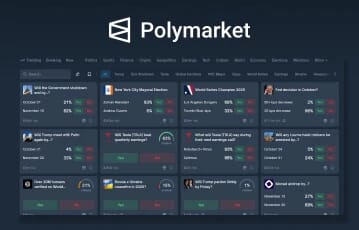
Polymarket: Pros and Cons
- Provides hundreds of event contracts
- Features an Android and iOS app
- Supports multiple cryptocurrencies
- Services are limited in the US
Then there’s Polymarket. It was launched in 2020, built on the Polygon blockchain. As such, it runs on USD Coin (USDC), a stablecoin pegged to the US dollar. As such, every trade is settled on-chain; every transaction is publicly visible and verifiable. Interestingly, it offers contracts based on a supply-and-demand model; no need to wait for a trader to sell before you buy.
The platform hit a regulatory snag in 2022, when the CFTC ordered it to pay a $1.4 million penalty, resulting in a ban from the US market. By 2025, Polymarket returned via the acquisition of QCEX, a Designated Contract Market (DCM). Both entities are registered with and overseen by the CFTC, thus giving Polymarket the legal infrastructure to offer event contracts to US traders.
Are Kalshi and Polymarket legal?
We often come across the question “Is Kalshi legal?” or “Is Polymarket legal?” The clear answer is yes. Kalshi holds a Designated Contract Market license under CFTC oversight. That’s the same regulatory category as major US financial exchanges.
Polymarket also operates under CFTC oversight and has recently acquired a CFTC-licensed exchange, QCEX, to serve the US market. Both platforms are available in all US states and require users to be at least 18 years old before registering.
Exploring the key differences between Kalshi and Polymarket
Having explored how each platform works, let’s consider a few sections where we could see slight differences.
💧 Volume
Volume tells you how liquid a platform is; the higher it is, the tighter the price between what buyers are willing to pay and what sellers are willing to accept. This makes it easy for traders to get in and out of event contracts without losing money on the spread.
According to research, Kalshi processed ~$23 billion in trading volume in 2025. This platform captured over 60% of the global prediction market share, thanks to the NFL season and rising interest in the 2026 midterms.
Polymarket also had its massive volume spike around the 2024 US election cycle. Here, trading volumes exceeded $9 billion. However, once the election was over, its sports markets took over, which led to a monthly volume of $3+ billion by late 2025.
So the clear winner depends on which market is trending, whether it’s elections, Fed rate decisions, or key sports games.
🖥️ User experience
No doubt, both platforms are easy to use. They’re very similar to each other, so if you find your way around one, you can do the same around the other. You’ll find the available markets in the top section, which you can easily access to compare the best prices. That was also our experience when we made our Kalshi vs Robinhood guide.
That said, a few differences exist. Kalshi is built to feel like a brokerage app. You sign up, verify your identity, connect a bank account or debit card, and you're trading. The interface is clean and organized.
Polymarket is designed for crypto-native users. As such, it requires a crypto wallet and sufficient USDC to participate. There’s also a bit of a learning curve if you’re not familiar with how blockchain transactions work.
Overall, both platforms are simple to access if you get past their payment structures.
Here’s a clear side-by-side comparison to highlight the features that further set the two platforms apart.
| Feature | Kalshi | Polymarket |
| Regulation | CFTC-regulated | CFTC-regulated |
| Technology | Centralized order book exchange | Decentralized blockchain (Polygon) |
| Available markets | Politics, sports, culture, crypto, climate, economics, finance, tech & science. | Politics, sports, finance, crypto, geopolitics, tech, culture, climate. |
| Available US states | All US states (plus DC) | All US states (plus DC) |
| Payment methods | Fiat via bank cards, bank transfer, Apple/Google Pay
Cryptocurrency: Bitcoin (BTC), USDC, and Solana (SOL) |
USD Coin (USDC) on Polygon |
| Fees | Between 2-4% based on debit banking transactions and trading contract fees | No banking fees |
| Mobile app | iOS and Android | iOS |
From the table above, you’ll notice that only a few things separate Polymarket and Kalshi: funding type, fees, and technology. If you’re a trader who wants to engage in a prediction market without crypto wallets, Kalshi seems like the practical choice. The same goes for cryptocurrency traders who want a prediction market site that lets them trade on real-world outcomes using crypto assets.
Getting started with Polymarket or Kalshi
If you have chosen your platform based on our discussions so far, it’s time to register an account. In our experience, the steps are quite easy to follow.
Registering an account with Polymarket
-
Before you register an account, get a crypto wallet that’s compatible with USDC.
-
Once you have the wallet and it’s set up, buy some USDC from crypto exchanges.
-
Click the banners on this page to sign up with Polymarket.
-
Begin your registration using your email address. Alternatively, you can link your Google account or connect your crypto wallet.
-
Once you’re logged in, head to the cashier section to deposit USDC to your Polymarket account.
-
Funds appear quickly, so explore the prediction markets of choice.
-
Choose a market and make your selection.
-
Set your trades and confirm the transaction.
-
Once you have confirmed your trades, you can do any of the following: Sell your contracts when you’re happy with a profit, mitigate a loss by leaving the trade early if it isn’t going your way, or hold on to the contract till the event resolves.
Registering an account with Kalshi
-
Click the links on this page to visit Kalshi’s official page.
-
Open an account using your email and complete any verification required.
-
Link your payment method (card, bank transfer, Apple Pay, or Google Pay) and deposit funds in USD.
-
When your funds land, browse the prediction markets.
-
Choose a market and pick yes or no.
-
Set the amount of the contract you want to buy and confirm the transaction.
-
Once confirmed, you can either sell your contract when you’re happy with its current state or hold on till the event resolves to $1 or $0.
Learn More About Prediction Markets Through Our Detailed Guides
Need more context before comparing prediction market sites? The prediction market guides below explain how they work, how event contracts are structured, how to read market prices, and how major platforms compare. Use them to understand the basics before choosing where to trade.
| Prediction Market Guides | Check the Guide Here |
|---|---|
| What Is a Prediction Market | What Is a Prediction Market and How It Works |
| Prediction Markets in the US? | Are Prediction Markets Legal in the US? |
| Kalshi vs Polymarket | Kalshi vs Polymarket: Which Prediction Market Is Best For You |
| Kalshi vs Robinhood | Kalshi vs Robinhood: Which Prediction Market Is Best For You |
| Event Contracts | What Are Event Contracts and How They Work |
| Prediction Markets vs Sportsbooks | Prediction Markets vs Sportsbooks: Differences Explained |
| How to Read Market Prices | How to Read Market Prices as Probabilities |
| The Hidden Costs of Event Trading | The Hidden Costs of Event Trading Explained |
Which would you pick: Polymarket or Kalshi?
If you are looking to get started with a prediction market site, you can’t go wrong with either Polymarket or Kalshi. Kalshi is regulated, dollar-based, and practical for anyone who wants to start trading event contracts without hassle.
Polymarket is the crypto-native option with global reach and unmatched on-chain transparency. This key difference could affect your final decision about where to start. If in doubt, our banners on this page can help you. So click them and explore both platforms today.