Best Betting Sites
»
Best Prediction Market Sites for Trading Event Contracts
»
What Is a Prediction Market and How It Works
»
Prediction Markets vs Sportsbooks
Prediction Markets vs Sportsbooks: What’s the Difference
By
James Thompson,
Last Updated on 17.09.2026
At first glance, prediction markets vs sportsbooks may seem to some like two ways of doing the same thing - putting money behind something you think will happen. But with a closer look, the differences are there to see.
Whatever your reason for being interested in prediction markets, it certainly helps to understand not only the ways in which they are alike, but their key differences and to disambiguate some of what you may have already heard. Below, we’ll help to draw the key distinctions and enlighten those who are looking for the facts about prediction markets vs sportsbooks.
Best Sweeps Casino Promo
The Best Prediction Market Sites for Sports

Table of Contents
- Prediction markets vs sportsbooks: What may look similar
- Prediction markets pros and cons vs sportsbooks
- The core difference: Trading vs betting
- How pricing works
- Access and availability
- Cost and efficiency
- Learn More About Prediction Markets Through Our Detailed Guides
- Our top recommended prediction markets
- Conclusion: Prediction markets vs sportsbooks show some real differences
- Prediction markets vs sportsbooks FAQ
Prediction markets vs sportsbooks: What may look similar
If you have ever interacted with a sportsbook, the comparison is an easy one to draw. Both prediction markets and sports betting involve looking at uncertain outcomes and seeing the potential to gain or lose depending on what happens when the outcome is decided. You’ll notice familiar elements:
- Prices that shift over time
- Outcomes that are framed as possibilities
- Opportunities to take action before an event resolves
With these facts laid out, it is important to understand where framing enters the equation. In sportsbooks, you’re placing a wager at odds set by the oddsmakers. In prediction markets, you’re entering a position in a contract whose price moves dynamically based on supply and demand. Prediction markets are used as a financial instrument and regulated as such. That’s an important distinction.
Prediction markets pros and cons vs sportsbooks

Pros and Cons
- Transparent Probability Pricing
- Peer-Driven Market Outcomes
- Flexible Entry and Exit
- Liquidity Can Vary
The core difference: Trading vs betting
The simplest way to understand prediction markets vs sportsbooks is this: one is structured as a wager, the other as a trade. It’s beneficial to look at it from the following point of view:
In sportsbooks
- You accept odds set by the operator
- Your position is locked in once placed
- Your outcome depends solely on the event result, except where early cashout is available
In prediction markets
- You buy or sell contracts tied to outcomes
- Prices fluctuate based on collective, information-driven sentiment
- You can exit before resolution
While both involve risk, and the similarities are there, prediction markets function more like a marketplace of opinions. You aren’t just backing a side - you’re expressing a probability and reacting as new information emerges. It has more in common with trading stocks than with sportsbook betting.
| Feature | Sportsbooks | Prediction Markets |
| Structure | Fixed odds wager | Tradable contract |
| Pricing | Set by operator | Set by participants |
| Flexibility | Limited after placement | Can exit any time |
| Edge | Built-in margin | Market-driven spreads |
| Core Activity | Betting on outcomes | Trading on probabilities |
How pricing works
The gap between the sides in prediction markets vs sportsbooks widens further when you consider pricing.
Sportsbooks build in their own margin - this is often referred to as an overround. The odds you see are designed to ensure that the operator profits over time no matter how the incomes are distributed. Even when you win, the system retains an edge. Prediction markets, on the other hand, are all about the prices finding their own level.
A contract trading at $0.65 implies a probability of 65%. That price moves as participants buy and sell based on the available information. Understanding how to read market prices is essential. Instead of asking yourself “what are the odds?” you need to be asking “what does the market currently believe - and do I think it’s right?”.
Access and availability
There is a more prosaic difference than all of the above, of course. While it is certainly true that there are more technical distinctions, there is also the unmistakable fact that huge swathes of the United States cannot legally bet at sportsbooks. If they want to test their knowledge and predictive power then they’re going to have an opportunity to look at Robinhood sports markets which the sportsbook sector simply doesn’t offer them right now. While the regulatory picture could change on either side in the future, right now this is an important difference.
There are also differences in terms of what can be predicted vs what can be bet on. Participants interested in broader event categories and more specific propositions can find that opportunity more easily in prediction markets. While Polymarket sports events are certainly available, much of the interest comes from the fact that you can also predict specific, granular outcomes such as the turnout in an upcoming election or the timing of a royal abdication. While more and more sportsbooks are offering markets beyond the sporting world, the scope is limited and always will be compared to prediction markets.
Cost and efficiency
An often overlooked distinction between the two regards structure and cost. While you don’t “see” the fees at a sportsbook, the charge is there, it’s just embedded in the price. While the costs of event trading are more prominent, they’re also more transparent. You’ll expect to pay trading fees, although these are low, usually between 1-3%. There are also bid-ask spreads, the difference between the buying and selling price of a market, and occasionally slippage in prices due to market liquidity. It’s a good idea to inform yourself on these costs before you begin trading.
Learn More About Prediction Markets Through Our Detailed Guides
Need more context before comparing prediction market sites? The prediction market guides below explain how they work, how event contracts are structured, how to read market prices, and how major platforms compare. Use them to understand the basics before choosing where to trade.
| Prediction Market Guides | Check the Guide Here |
|---|---|
| What Is a Prediction Market | What Is a Prediction Market and How It Works |
| Prediction Markets in the US? | Are Prediction Markets Legal in the US? |
| Kalshi vs Polymarket | Kalshi vs Polymarket: Which Prediction Market Is Best For You |
| Kalshi vs Robinhood | Kalshi vs Robinhood: Which Prediction Market Is Best For You |
| Event Contracts | What Are Event Contracts and How They Work |
| Prediction Markets vs Sportsbooks | Prediction Markets vs Sportsbooks: Differences Explained |
| How to Read Market Prices | How to Read Market Prices as Probabilities |
| The Hidden Costs of Event Trading | The Hidden Costs of Event Trading Explained |
Our top recommended prediction markets
Now you know what to expect when signing up to a prediction market platform, you’re probably wondering where to start. Take a look at the list of options on this page, all of which have been put through their paces here at SportsGambler, with comprehensive reviews designed to give you the complete lowdown on each one. But if you’d rather get straight down to trading event contracts, both of the following options are deserving of a closer look.
Check out our mini reviews, then click on the link to go straight to your preferred option - we’ll let you know about any special promo codes that might be available, so you won’t have to worry about missing out on any welcome bonuses!
Polymarket

Polymarket: Pros and Cons
- Provides hundreds of event contracts
- Features an Android and iOS app
- Supports multiple cryptocurrencies
- Services are limited in the US
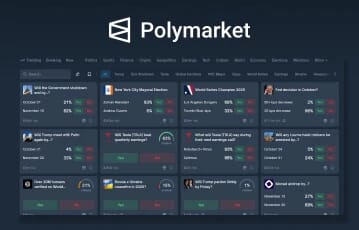
Sign up for an account at Polymarket and you’ll have access to the world’s largest prediction market site, which has been available across the US since late 2025. The platform is fully regulated by the CFTC (Commodity Futures Trading Commission), so you won’t need to have any concerns about its legitimacy. Multiple cryptocurrencies are supported here, with deposits automatically converted to USDC, so you can keep track of your balance in USD for ease of use.
Polymarket provides hundreds of event contracts across a wide range of sports, including football, cricket, basketball, hockey, tennis, rugby - and even chess. You can trade sports event contracts across live and future games, with plenty of markets to choose from, such as moneylines, spreads and totals. Easy navigation makes this a platform suitable for all experience levels, with plenty of helpful tools and resources to inform your predictions.
Crypto.com


Crypto.com: Pros and Cons
- Dedicated mobile app
- Several categories for prediction trading
- Fiat and crypto options
- No prediction market welcome bonus
Crypto.com is a safe and secure prediction market platform that’s fully regulated by the CFTC. Sign up for a new customer account to receive a generous welcome bonus that gives you a 100% first deposit match up to $250, with more promotions to look forward to, including a referral program that lets you share your link with friends and reap the benefits if they go on to create their own Crypto.com account.
Once you’ve undergone the necessary KYC checks, you’ll have access to prediction markets across categories including sports, crypto, politics, culture, economics and climate. There’s a solid range of sports on offer, with options such as football, soccer, basketball, baseball, motorsports and even golf and tennis. As the name suggests, you can fund your Crypto.com account with a variety of cryptocurrencies - which are renowned for speedy transactions -, or you can use fiat currency, if that’s your preference. The intuitive interface is easy to get to grips with, but if you need any assistance you’ll find 24/7 support is available via live chat and email.
Conclusion: Prediction markets vs sportsbooks show some real differences
When comparing prediction markets vs sportsbooks it’s not about proving that one is the same as the other, or even that either is “better”. It’s about understanding what each offers and which might be the best for your specific needs at the time. Once you see the very real differences between the two, it becomes easier to make a choice, either for ongoing use or for a particular situation. If you’re curious, it’s worth testing things out yourself in real time, checking out the prediction market platforms featured on this page.