
Best Betting Sites
»
Polymarket Review
»
Polymarket Crypto Guide for 2026
Polymarket Crypto Guide for 2026: How Polymarket Works With Cryptocurrency
By
James Thompson,
Last Updated on 25.11.2026
On this page, we'll go over the key things you need to know about Polymarket crypto prediction markets. This includes an overlay of the vast range of markets and crypto assets featured on the platform. Plus, you'll learn what it means to trade event contracts, and then we'll show you how to get started. If all this is exactly what you're here for, keep reading for more.
Table of Contents
- Facts about Polymarket crypto markets
- What is a Polymarket crypto prediction market?
- Types of Polymarket crypto prediction markets
- How to begin your Polymarket crypto price prediction
- Pros and cons of Polymarket crypto markets
- Start making Polymarket crypto predictions today
- Polymarket crypto prediction market FAQs
Facts about Polymarket crypto markets
Before answering the question of how Polymarket works, it helps to build from a solid foundation. Here are the key things to keep in mind about crypto prediction markets on Polymarket:
- The main crypto assets available for predictions are Bitcoin, Ethereum, Solana, Ripple, Dogecoin, Binance Coin, and Hyperliquid.
- The prediction timeframes on Polymarket cover a wide range of options, from 5 minutes to yearly.
- Every contract is priced between $0.01 and $0.99, representing the implied probability of an event occurring.
- Polymarket US is operated by QCX LLC d/b/a Polymarket US, a Designated Contract Market that's regulated by the Commodity Futures Trading Commission (CFTC).
What is a Polymarket crypto prediction market?
Crypto prediction markets on Polymarket are pretty straightforward. What basically happens is that you predict whether the price of a cryptocurrency will rise or fall within a specified timeframe. On Polymarket, the outcomes are represented by “Up” and “Down” choices, and in some other cases, “Yes” and “No”. When trading a Polymarket crypto price, you don't need to purchase (or own) the assets directly.
All you'll be doing is purchasing the event contract (Up/Down or Yes/No) that matches your prediction. The value of each contract is determined by the trading activities of people on the platform. Contracts are priced between $0.01 and $0.99, although you'll see them shown in cents (¢) on the platform.
To give you an idea of how it works, here's an example we pulled from the Polymarket prediction markets crypto day trading section:
- “What price will Bitcoin hit on November 18?”
For this event, the price options were extensively varied. Some include “above $72,000”, “above $70,000”, “below $62,000”, “below $61,000”, etc. Each of these price points had a “Yes” and “No” contract attached. Your goal here will be to first pick a potential price target. Then, you'll decide whether to buy a “Yes” or “No” contract for that price target based on what you believe will happen.
So let's say you choose to purchase a “Yes” contract on BTC settling at “below $62,000”. Its price, which is set at 71¢ ($0.71), means that overall traders' sentiment believes that there's a 71% probability of this outcome occurring. Now, it's worth mentioning that these prices (or implied probabilities) are not fixed by Polymarket. It's determined by the collective sentiments of traders regarding the likelihood of each outcome.
So in this case, it means that active traders believe there’s a 71% chance of Bitcoin closing below $62,000. If you're wondering how accurate Polymarket is regarding crypto prices, make sure you read the specific rules for each event. The resolution source that provides the price data for each market is always stated to avoid disputes.
Types of Polymarket crypto prediction markets
Beyond price predictions, Polymarket also lets you predict other events that have to do with crypto generally. Markets that fall into this category have nothing to do with pricing, but they attract strong volume. We'll cover a few of these markets, along with the various price target durations you can trade on the platform.
| Crypto prediction market types | Available cryptocurrencies | Real examples |
|---|---|---|
| 5 minute | BTC, ETH, SOL, XRP, DOGE, HYPE, BNB | Will BTC price go Up or Down in the next 5 minutes? |
| 15 minute | BTC, ETH, SOL, XRP, DOGE, HYPE, BNB | Will ETH price go Up or Down in the next 15 minutes? |
| 1 hour | BTC, ETH, SOL, XRP, DOGE, HYPE, BNB | Will XRP price go Up or Down in the next hour? |
| 4 hours | BTC, ETH, SOL, XRP, DOGE, HYPE, BNB | Will SOL price go Up or Down in the next 4 hours? |
| Daily | BTC, ETH, SOL, XRP, DOGE, HYPE, BNB | Will DOGE price go Up or Down at the end of the day? |
| Weekly | BTC, ETH, SOL, XRP | What price will Ethereum hit at the end of this week? |
| Monthly | BTC, ETH, SOL, XRP, DOGE, HYPE, BNB, Chainlink (LINK), Ethena, Lighter (LIT) | What price will Hyperliquid hit at the end of this month? |
| Yearly | BTC, ETH, SOL, XRP, DOGE, HYPE, BNB, Uniswap (UNI), Zcash (ZEC), Chainlink (LINK), Lighter (LIT), $ANSEM, Plasma, Pump.fun, Sui, edgeX, AVAX, $PONS | What price will BNB hit at the end of 2026? |
| Targets (milestones, comparisons, NFTs) | - | Will Bitcoin outperform Gold in 2026? |
| Pre-market (token launches, FDV, airdrops, public sales) | - | Will Revolut launch a USD stablecoin in 2026? |
| Institutions (treasuries, gov reserves, listings & IPOs, financials, ETFs) | - | Which companies will announce bankruptcy before 2027? |
| Industry (protocol risk, protocol upgrades, legal & policy, culture) | - | Will Satoshi move any Bitcoin in 2026? |
| Protocol metrics (TVL, fees & revenue, open interest, network stats) | - | What will Hyperliquid HIP-3 open interest reach in 2026? |
These are the markets we found at the time of this review. But keep in mind that the list is always changing. It's also important we mention that fees of up to 1.80% are often included on every trade. Always remember this, as it could impact your transactions when you request .
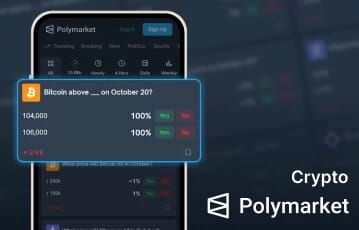
Crypto prediction trading on Polymarket

Explore culture markets on Polymarket
How to begin your Polymarket crypto price prediction
Here are quick steps to take when you want to get into the action at Polymarket:
-
Click any of the links on this page to visit Polymarket on your browser.
-
Create a new account by providing your email address and creating a password. You can also connect directly with Google or your crypto wallet.
-
Verify your identity by uploading the necessary documents.
-
Make a deposit into your Polymarket account (minimum of $2).
-
Now head to the lobby and click the “Crypto” tab.
-
Browse the available markets and select the contract you want to purchase.
-
Hit the “Trade” button to complete the transaction.
Pros and cons of Polymarket crypto markets
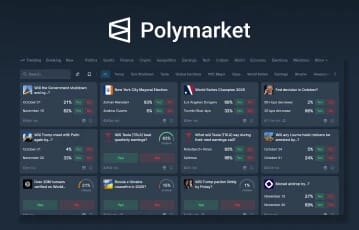
Pros and Cons
- Dozens of markets to trade on
- Covers all major cryptocurrencies
- 5 minute crypto markets are available
- Crypto prices are extremely volatile
Start making Polymarket crypto predictions today
The range of prediction markets and cryptocurrencies on Polymarket is quite extensive. You'll have no shortage of price-target contracts on the biggest crypto assets today, along with plenty of other crypto-related events. If you can't wait to get started, simply click the banners to visit the Polymarket website and start predicting.
