Best Betting Sites
»
Stake.us Review
»
How to Play Stake Limbo and Predict Your Wins in October 2026
How to Play Stake Limbo and Predict Your Wins in October 2026
By
James Thompson,
Last Updated on 23.09.2026
Stake Limbo is a fast-paced game where you bet on how high the multiplier will go before it crashes. The game’s simplicity and possible chances for bigger wins have made it a favorite for pretty much all crypto casino players.
In this guide, I’ll explain exactly how Limbo works, walk you through step-by-step gameplay, and break down the interface and key bet settings. You’ll also learn the Stake Limbo payout odds and some useful tips to manage your risk. I’ll close off with my expert strategies to help you get more consistent results.
Table of Contents

Stake.us Highlights
- Amazing selection of games from top providers
- Stake developed games that are exclusive to the site
- Slots, table and live dealer games
What is Stake Limbo?
Stake Limbo is a simple yet thrilling multiplier prediction game where you bet on how high a multiplier will go before it crashes. But even knowing this, most new players don’t truly understand its inner workings. Here’s my detailed breakdown of the game and its key features:
Game overview
To play, you select a bet amount and a target multiplier from as low as 1.01x to as high as 1,000,000x. If the game’s random multiplier reaches or exceeds your target, you win your bet multiplied by that number. If it crashes before hitting your target, you lose your wager.
Limbo runs on a provably fair random number generator, ensuring transparency and fairness. The multiplier starts at 1x and climbs until it randomly stops, with each round lasting just a few seconds. This fast pace keeps things exciting and can make for some dramatic streaks.
Key features
Key features of the Stake Limbo game include a clean interface. You get the essentials, like where you input your bet and multiplier, an auto-bet mode for continuous play, and a payout formula that’s simply your bet times the multiplier.
The risk and reward balance depends entirely on the multiplier you choose. Lower multipliers offer safer, smaller wins, while higher multipliers come with bigger payouts but much lower chances of success. This relative simplicity is something we’ve come to expect from Stake Originals games like Stake Wheel. There’s less emphasis on bells and whistles, so you can really lock in and enjoy the gameplay for what it is.
How to play Stake Limbo – Step by step
Now that you’re familiar with what Limbo is, let’s shine the spotlight on how to play the game, and how you can make the most out of your Stake Limbo sessions.
1. Getting started
Sign up with Stake.com. Once your account is set up, log in, navigate to the Limbo game under the Stake Original. There, you’ll also find other proprietary games like Stake Pump and Wheel. Click on Limbo and get ready to play.
2. Playing the game
You start by choosing your bet amount in crypto or fiat currency (Stake supports both). Next, set your target multiplier (between 1.01x and 1,000,000x). Lower multipliers bring more frequent wins but smaller payouts, while higher multipliers are riskier but can pay out huge. While the possibility of a bigger pay out can be attractive of course, playing responsibly should always stay on top of your priorities.
After setting these, click the “Bet” button to start the round. The game then counts up until it suddenly stops at a random multiplier. If this multiplier is equal to or greater than your target, you win instantly. If not, you lose your bet.

25 SC and 250K GC signup bonus
T&Cs and 21+ apply
10k Gold Coins + 1 Stake Cash Daily for life!
T&Cs and 21+ apply
25 SC FREE and 250K GC Sign Up Bonus
T&Cs and 21+ apply
Stake Limbo interface and features
While Limbo has advanced settings and professional features, the gameplay itself feels pretty raw. It doesn’t wow with animations, visual themes or any dynamic effects. Stake Limbo is all about the game.
1. Game Screen Elements
The interface is concise and to the point. You have controls to manage your targets and set your stakes, and a Manual/Auto toggle to enable autoplay with all its advanced features. The game is self-explanatory, and within a few rounds, you should get the feel for the pace and the gameplay.
Bonus Features
The bonus features here are the advanced settings for Auto Play and the ability to adjust targets by multipliers or winning probability. You don’t have bonus buy, hold and win, or any side bets, just purely the tools you need to play the base game. The stripped-back visuals and nuanced sound effects don't distract, and they look just as good on mobile devices and smaller screens.
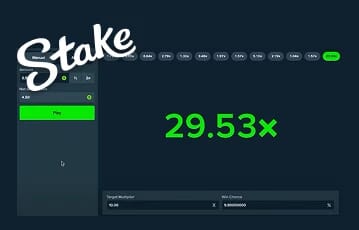
Preview of Limbo casino game at Stake

Enjoy other original games at Stake
Strategies to play Stake Limbo better
A Stake Limbo multiplier strategy is a must-have if you want to get more consistent gaming results. Here’s a breakdown of the different strategies you can use at different risk levels.
Low-risk strategy
For steady, frequent wins, I recommend choosing low multipliers between 1.1x and 1.2x. This approach offers about a 90-95% chance of winning each round, making it ideal for beginners or conservative players who want to grow their bankroll slowly without big swings.
Medium-risk strategy
If you’re comfortable with some risk, multipliers around 2x to 3x strike a balance between risk and reward. Win probabilities here range roughly from 33% to 66%, giving you moderate payouts with a fair chance of success.
High-risk strategy
Going for multipliers of 10x or higher is for thrill-seekers and experienced players. The chances of winning drop significantly (around 10-20%), but the payouts can be impressive if you do manage to get a win.
| Multiplier Range | Risk Level | Approx Win Probability | Outcomes |
|---|---|---|---|
| 1.1x – 1.2x | Low Risk | 90% – 95% | Small but frequent wins |
| 1.5x – 3x | Medium Risk | 33% – 66% | Moderate wins |
| 5x – 10x | High Risk | 10% – 20% | Larger, less frequent wins |
| 50x – 1,000,000x | Very High Risk | <1% | Huge, rare jackpot wins |
Why Most Stake Limbo Strategies Fail
The problem with many strategies is that they make broad assumptions, relating to the variance, probabilities of the outcomes, or that they attempt to give the player an edge. You can adjust the risks here to meet your preferences and view historic results to gain an idea of the variance, but at the end of the day, nothing is guaranteed.
Any patterns that you find in historic results are pure coincidence, and the last outcomes have no bearing on what may happen next. If you set a 2.0 multiplier and won the last 3 games, your chance of winning the next is always going to be 49.5% according to the game RTP.
Delving further, progressive stake sizing strategies like Martingale can pay off, but they are very risky. Because it just takes a strong case of variance to come along to push you deep into losses, and at one point with the Martingale strategy, you won't be able to continue, thus conceding those losses. The best way to avoid these is to use those Stop losses in Autoplay, or practise discipline when you are on a losing streak. It is always best to save whatever you have left rather than give into the impulse to play until you go fully bust.
Stake Limbo Odds & Probability Explained
The relationship between the multipliers and probabilities is reciprocal and always at a balance. No multiplier gives you a bigger edge or a smaller one over the house. So you have to approach the ratio cautiously, preparing with both a robust bankroll and a realistic outlook on the volatility.
The house always keeps a 1% edge, regardless of how high or low you set your multiplier. The outcomes are randomized, but with that 1% house edge in Stake Limbo, the operator ensures that over the course of millions of wagers, it should remain in profit. You, on the other hand, are not playing millions of rounds here. Instead, you are playing in the hope that variance swings in your way, and in the next rounds you play, you get good luck and break ahead. Then, you can end your session on a high, and walk away a winner.
Multipliers and Probability Balance
Observe how the 1.1 multiplier has a 90% win ratio, meaning that 90% of the time, you should make 10 GC for every 100 GC staked. The remaining 10% of the time, you lose. Say you play 10 rounds, staking 10 GC every round. In a mathematically idyllic scenario, you win 9 of those rounds, pocketing 1 GC profit each time, for a total of + 9 GC. The remaining 1 round you lose, so you are down 10 GC, making for a total of - 1 GC. In the mathematically perfect scenario, the house always wins because of that 1% edge. However, variance can mix up those results, and that is what you must be prepared for.
The target multipliers affect volatility, with higher targets meaning you will have higher volatility and wins come less frequently. Lower targets create lower volatility, meaning wins come more often but the profit margins are smaller. In both cases, you are hoping for the wins to come slightly more regularly than the mathematical odds imply.
The only difference is that with high volatility, you will encounter more losses, so you should adjust your bankroll to support this. Players with fewer GC or SC to play with are advised to play lower volatility, whereas players with more GC /SC can play the higher volatility, waiting for those seldom bigger wins.
25 SC and 250K GC signup bonus
T&Cs and 21+ apply
10k Gold Coins + 1 Stake Cash Daily for life!
T&Cs and 21+ apply
25 SC FREE and 250K GC Sign Up Bonus
T&Cs and 21+ apply
Can You Actually Win at Stake Limbo?
Yes, Stake Limbo is a game that you can actually win and come out ahead in, but you need to curb your expectations. The RTP is high, at 99%, and this is a provably fair game to play. However, you cannot ignore the fact that the house has an edge, albeit a small one.
You can tweak the volatility to suit your bankroll and your expectations. Don't chase losses by setting higher multipliers, or set low multipliers but stake bigger to leverage bigger wins. The goal is to create a sturdy bankroll that you can ride for multiple rounds, and if variance favors you, then you should quit while you are ahead. Set realistic targets, and instead of adjusting the multipliers to those targets, make it suit your stake. Ideally, the stake should be a proportion of your bankroll that you can sustain for many rounds, but not too small to minimize any potential winnings.
If you are playing for higher multipliers, you will create higher volatility and therefore need a larger bankroll. Then, play Stake Limbo round by round and be realistic with your targets. It is always best to quit while you are ahead, and if you are on a losing streak, quitting before you go fully bust.
You may not win every time, but if you maintain control over your spending and learn to stop while you are ahead, you are setting yourself up in the best way possible.
Stake Limbo Pros and Cons
Stake Limbo offers the perfect balance between simplicity and excitement, but that doesn’t mean the game is flawless. While playing, there was a lot to like, but also some things I thought could be improved.

Pros and Cons of Stake Limbo
- Fast-paced gameplay keeps you engaged
- Huge potential payouts of up to 1,000,000x your bet
- Clean, user-friendly interface
- No bonus rounds or side bets
Start playing Stake Limbo
Stake Limbo offers a low house edge (about 3%) and is easy to learn, making it an excellent game for any player. It’s a bit bare-boned, though, so it’s definitely not your cup of tea if you’re into bright visuals and flashy bonus rounds.
You have the chance to win as much as 1,000,000x your bet, though, so there’s a lot to love, but also responsible gaming to look out for. I shared a few gaming tips. Start playing now and see what works best for you. Just click the banner at the top of the page to sign up.